Does your office carpet still look dirty after a thorough vacuuming? Stains that keep returning or a musty smell that lingers point to buildup beneath the surface. In busy Walnut Creek offices, daily foot traffic quickly changes how carpet looks and feels. These changes often show that routine maintenance is no longer enough.
Employees, clients, and visitors bring more than visible dirt into commercial spaces. Fine particles and debris settle deep into carpet fibers, where regular vacuuming has limited reach. EPA explains that carpet acts as a reservoir for dust, dirt, pollen, and other materials. Carpet that feels rough underfoot or loses its original texture also reveals embedded dirt that is easy to overlook. Professional carpet cleaning in Walnut Creek can address this deeper accumulation more thoroughly.
8 Warning Signs It’s Time for a Deeper Office Carpet Clean
Office carpet rarely looks heavily soiled overnight. Gradual changes in its appearance and texture often reveal that regular upkeep is no longer keeping up with daily use. Busy areas tend to show these changes sooner, while buildup in less noticeable spots can go undetected. Knowing what to watch for makes it easier to recognize when deeper cleaning is due.
Persistent Odors Linger in the Carpet
Walking into an office and noticing a stale or musty smell is more than a comfort issue when it keeps returning. Carpet fibers hold onto food residue, spilled drinks, tracked-in moisture, and other materials that routine vacuuming does not remove. Some odors also point to moisture that has reached the carpet backing or padding, where surface cleaning has limited reach.
Musty Odors From Moisture
Damp carpet that does not dry properly develops a persistent musty smell. Moisture trapped below the top layer also remains beyond the reach of ordinary vacuuming. Repeated damp odors deserve attention, particularly in areas exposed to spills or moisture.
Food and Beverage Odors
Coffee, soda, food, and other spills often leave residue within carpet fibers after the visible mess is gone. That material continues producing smells even when the affected area looks clean. Frequent spills around desks, break rooms, and reception areas add to this buildup over time.
Odors That Return After Cleaning
Cleaning that only provides temporary relief often means residue or moisture remains deeper within the carpet. Air fresheners simply mask the smell while the underlying source remains. Recurring problems therefore call for deeper treatment rather than repeated basic freshening.
Stubborn Stains Keep Showing Up
Stains that reappear after cleaning show that the original spill has penetrated deeper than the upper carpet fibers. When the area dries, leftover residue or liquid rises through the fibers and recreates the mark. Coffee, food, and tracked-in grime become harder to remove when they sit within the pile for extended periods. Repeated marks around desks, entrances, and break areas therefore need deeper extraction rather than repeated spot treatment.
Dark Traffic Lanes Stand Out
Heavy foot traffic leaves a different pattern from an isolated spill. Repeated movement pushes soil into the same paths day after day, creating corridors, entrances, reception areas, and routes between workstations that are visibly darker than the surrounding carpet. Different parts of an office collect tracked-in soil at different rates, depending on how frequently people use them:
| Office area | Why soil builds up |
| Entrances | Shoes bring outdoor soil and debris indoors |
| Corridors | Employees repeatedly walk through the same paths |
| Reception areas | Visitors and staff create constant foot traffic |
| Routes between workstations | Frequent movement concentrates soil along specific paths |
The Carpet and Rug Institute notes that traffic lanes in corridors can significantly shorten the useful life of carpets. Persistent dark paths deserve attention before they cause further deterioration.
Carpet Looks Dull Across Large Areas
Overall carpet appearance tells a different story from an isolated stain. Large sections can gradually lose their original brightness even when no single spot looks heavily soiled. Fine soil works between carpet fibers and affects how they reflect light. Repeated workplace activity also leaves broad areas looking flat, faded, or generally lackluster.
Less-used sections often make this contrast easier to notice because they retain more of the carpet’s original color. Regular vacuuming removes loose debris from the visible layer. Deep cleaning addresses soil that remains within the pile when regular maintenance no longer restores the carpet’s original look.
Fibers Feel Flattened or Matted
Flattened carpet is more than a visual change. Heavy foot traffic, rolling chairs, and embedded soil gradually affect the pile, while day-to-day care mainly removes loose debris. When frequently used areas remain compressed or matted, deeper cleaning becomes important for removing stubborn buildup.
Heavy Foot Traffic
Repeated steps press down the same sections throughout the day. Busy walkways therefore lose their original lift sooner than lightly used areas.
Rolling Chairs Add Pressure
Chair wheels travel across the same narrow paths repeatedly, creating flattened tracks around desks and workstations. Furniture movement adds further strain where the carpet already receives heavy use.
Embedded Soil Affects Carpet Texture
Fine particles trapped between fibers add to the rough, flattened feel of heavily used carpet. Regular vacuuming removes loose debris but leaves some soil lodged deeper within the pile. Deep cleaning extracts these soil deposits and restores a cleaner, more consistent texture underfoot.
Dust Returns Soon After Vacuuming
Dust that reappears soon after cleaning suggests that fine particles remain lodged between carpet fibers. Frequent movement through shared spaces introduces new debris throughout the workday, adding to what has already settled below the pile. Vacuuming removes loose dirt, while finer particles remain harder to extract. When dust quickly becomes noticeable again, professional deep cleaning provides a more thorough way to remove those particles.
Allergens Build Up in High-Traffic Areas
High-traffic office areas receive more tracked-in material throughout the day, giving allergens more opportunities to settle into carpet fibers. The National Academies notes that carpeting in offices can accumulate allergens and serve as a reservoir for pollen. Look for these allergy-related signs around heavily used carpeted areas:
- Employees report more sneezing or nasal irritation in carpeted areas
- Allergy complaints seem more noticeable after heavy foot traffic
- Pollen or outdoor debris becomes visible in carpet near frequently used areas
- Symptoms appear to lessen when employees spend time away from the carpeted workspace
- Carpeted areas seem to trigger more complaints during periods of increased outdoor pollen
These signs do not automatically prove that carpet is causing allergy symptoms, since indoor allergens can come from several sources. Persistent concerns, however, justify a closer look at carpet cleanliness.
Carpet Feels Gritty Underfoot
Walking across office carpet should not leave your shoes feeling like they are dragging through fine grit. That rough, sandy sensation develops when fine soil and particles become lodged between carpet fibers. In busy Walnut Creek offices, repeated foot traffic can push this material deeper into areas that receive regular use. Check for these changes when assessing how the carpet feels underfoot:
- Rough Texture: Carpet feels coarse instead of soft and consistent.
- Gritty Footsteps: Fine particles become noticeable when walking across the carpet.
- Uneven Feel: Some sections feel rougher than nearby areas.
- Soil Underfoot: Dirt becomes noticeable on shoes after walking across carpeted areas.
- Persistent Grit: The rough sensation remains despite regular vacuuming.
Persistent grit indicates that surface vacuuming is no longer removing everything trapped within the carpet. Deep cleaning can remove accumulated soil and restore a cleaner, more consistent feel underfoot.
How Often Should Office Carpets Be Deep Cleaned?
Cleaning frequency depends on traffic levels, the amount of soil brought indoors, routine maintenance, carpet type, and manufacturer recommendations. The Carpet and Rug Institute recommends adjusting cleaning frequency to these conditions and performing deep cleaning before soil becomes easily visible. Use traffic level as a practical starting point when planning a deep-cleaning schedule:
| Office Carpet Use | Deep-Cleaning Frequency |
| Light traffic | Once per year |
| Moderate traffic | Twice per year |
| Heavy traffic | Four times per year |
| Extra-heavy traffic | Monthly |
Walnut Creek workplaces with heavier daily use may need more frequent deep cleaning than quieter private offices. Visible soil does not need to be the only trigger, since deep cleaning is recommended before buildup becomes obvious. Manufacturer maintenance instructions should also be considered when setting the schedule.
Keep Your Office Carpet Clean With JJ & CC Cleaning Services
Knowing the signs of buildup makes it easier to schedule professional cleaning at the right time. Regular vacuuming handles everyday soil, while deep cleaning reaches buildup that routine maintenance leaves behind. Consistent schedules keep office carpet looking cleaner and feeling better underfoot. At JJ & CC Cleaning Services, we provide professional carpet cleaning for businesses throughout Walnut Creek. We use hot water extraction and tailor our service to the carpet’s condition and cleaning needs. Contact us to schedule office carpet cleaning for your workplace.
Frequently Asked Questions
Why does my carpet still look dirty after vacuuming?
Vacuuming removes loose surface soil, but it does not remove every particle embedded between carpet fibers. Heavy foot traffic can push fine dirt deeper into the pile, leaving the carpet looking dull or dirty even after regular vacuuming. Deep cleaning extracts this embedded soil more thoroughly.
Why do carpet stains come back after cleaning?
Recurring stains often result from residue or liquid that has moved deeper into the carpet or padding. As the area dries, that material can move back toward the surface and make the stain visible again. Proper extraction and treatment of the affected area are needed when ordinary spot cleaning does not resolve the problem.
Can deep cleaning remove odors from office carpet?
Deep cleaning can remove many odors when the source is trapped soil, spills, or other material within the carpet. Odors that have reached the backing or padding can require more extensive treatment. Persistent smells that return after cleaning indicate that the source has not been fully addressed.
Is steam cleaning the same as deep carpet cleaning?
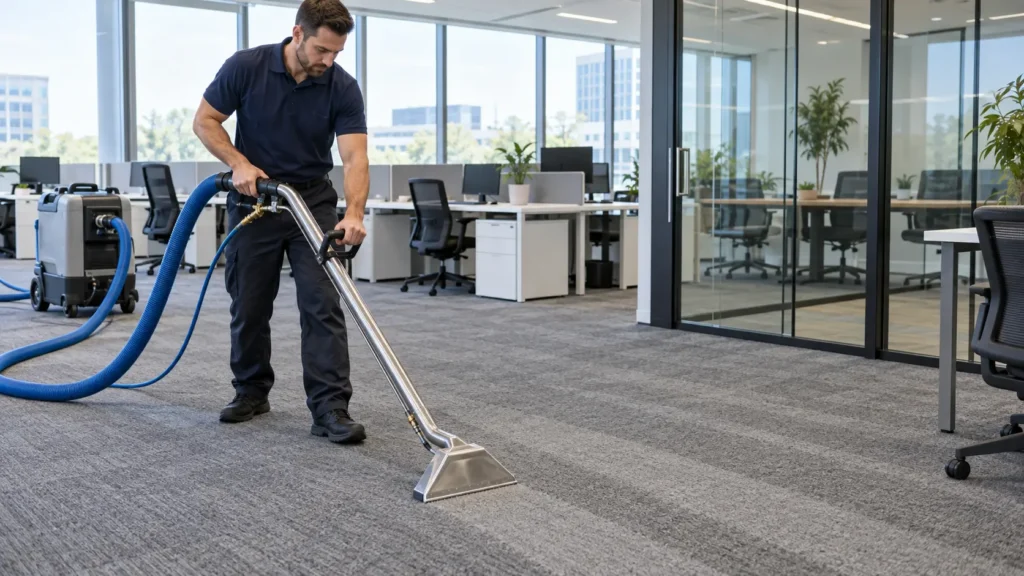
“Steam cleaning” is commonly used to describe hot water extraction, although the cleaning process does not rely on steam alone. Hot water and cleaning solutions are applied to the carpet and then extracted with powerful vacuum equipment. The method removes dissolved soil and moisture from the carpet rather than simply cleaning its surface.
Should office carpet be cleaned before it looks dirty?
Waiting until carpet looks heavily soiled lets soil accumulate deeper in the fibers. Regular deep cleaning removes buildup before it becomes difficult to address and keeps routine maintenance more effective. Traffic levels and the carpet manufacturer’s recommendations should guide the cleaning schedule.